
Hire Our Spaces
Welcome to SCRUM Studios — a home to artistic excellence and experimentation.
Whether you’re a large-scale commercial production company, or a first-time fringe solo artist, our vibrant Hammersmith hub offers a selection of versatile studio and events spaces catered to your needs.
SCRUM Studios is an artist-run initiative and charity. All proceeds from our space hires go towards funding our performance and educational programmes, and enables us to provide crucial rehearsal space for demographics of artists currently underrepresented in theatre.
Scroll below to read more about our spaces, access information and pricing.
15% OFF
Save 15% off studio hire when you book up to 5 days or more with us. Applies to standard rate bookings over the period 9 Feb - 6 Mar 2026.
To claim, use the discount code ‘SCRUMINHANDY15’ when submitting your booking enquiry.
-
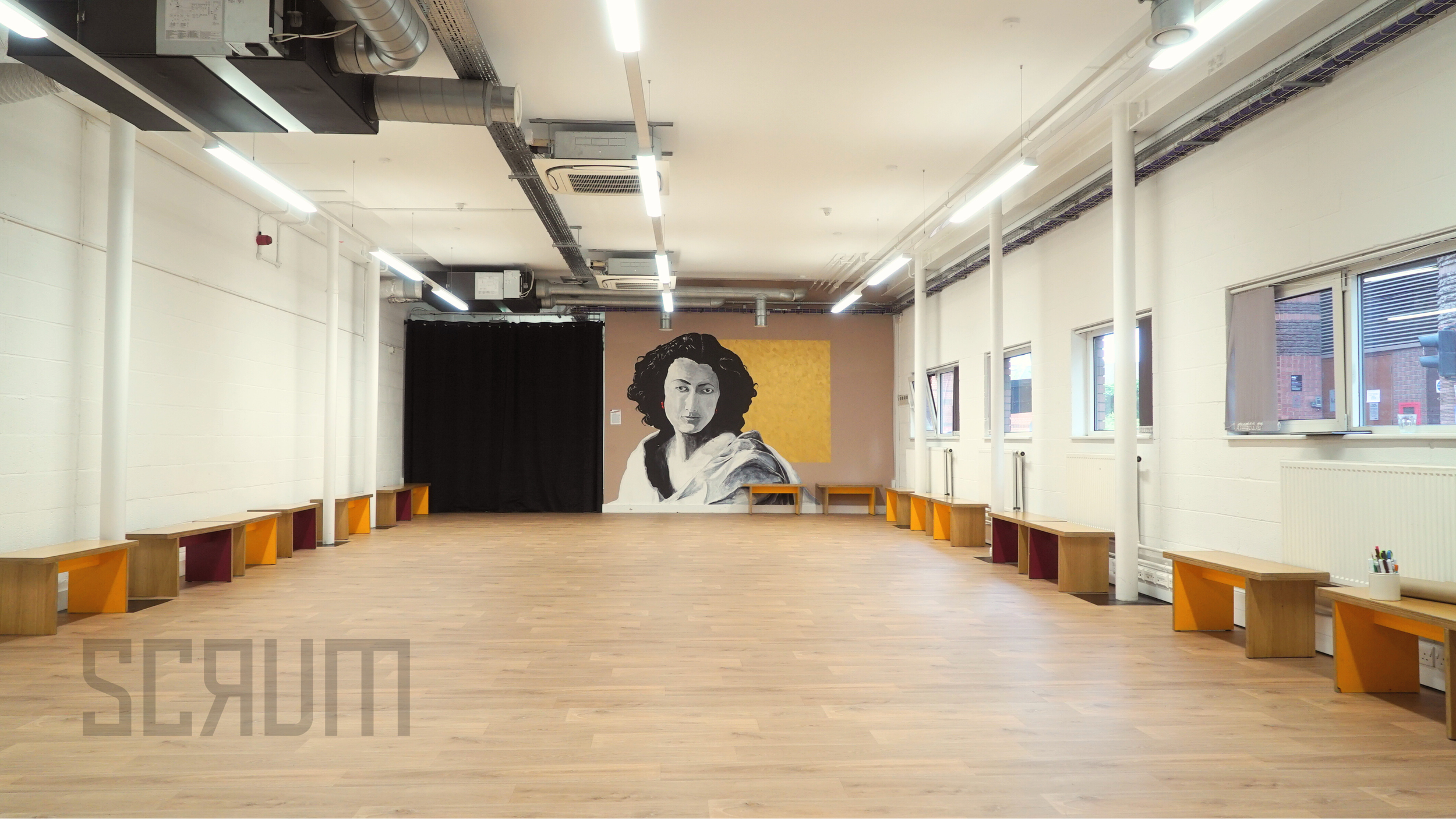
Studio Sarah
98m² studio, plus kitchen and breakout spaces
Studio Sarah is an all-inclusive suite, comprised of a spacious studio, exclusive kitchen, wheelchair accessible toilets and two breakout rooms. Perfect for mid-to-large-scale rehearsals, dance and movement workshops, staff training groups and events. Step-free accessible.
-

Studio Ira
70m² studio
An attractive studio with a high-slanted ceiling and sweeping views over leafy west London. Studio Ira is ideal for rehearsals, dance and movement workshops, auditions and more.
-

Studio Federico
58m² studio
Airy, adaptable and affordable. Studio Federico is a great fit for small-to-mid-sized rehearsals, workshops and creative projects.
-
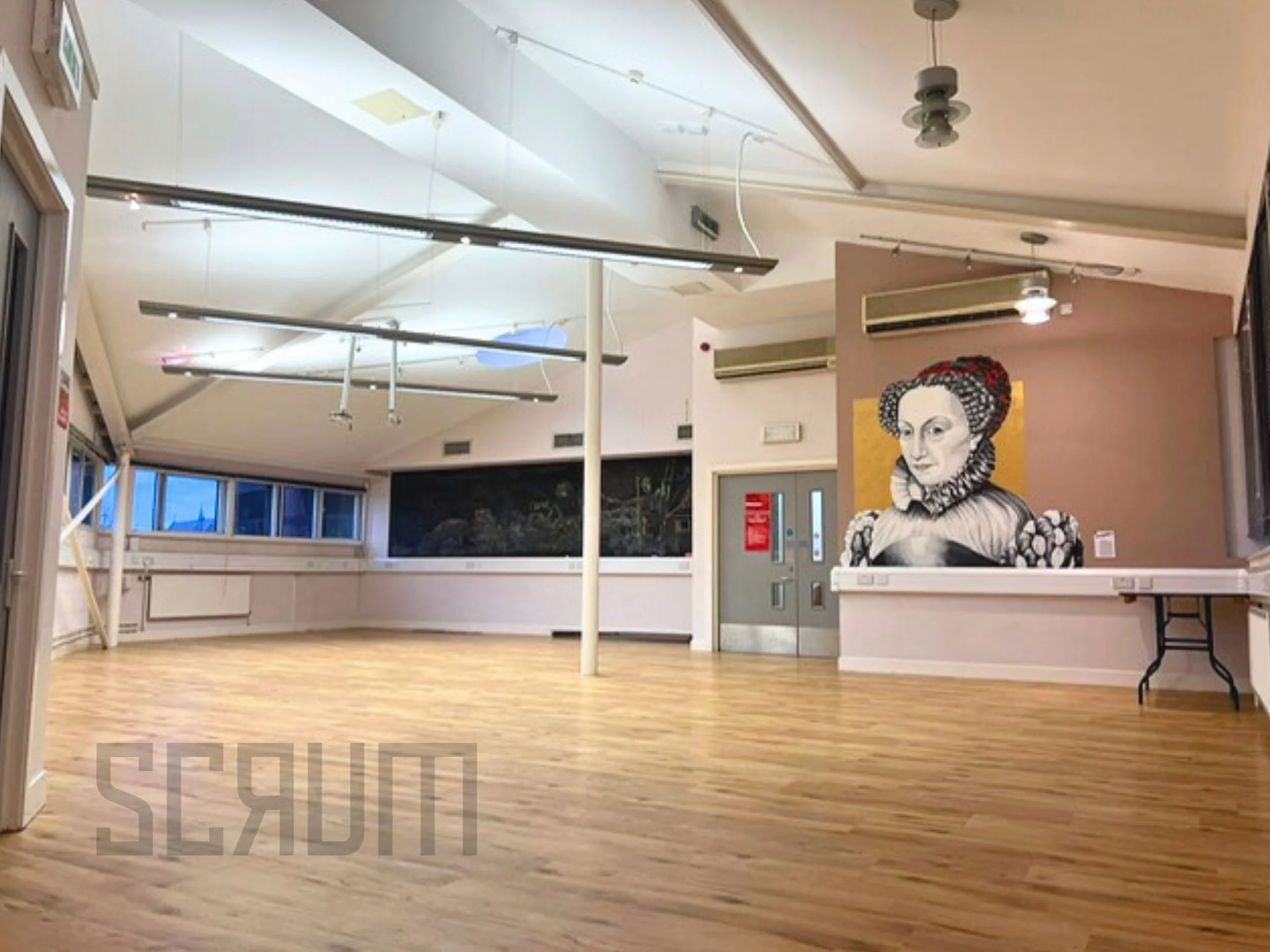
Studio Ellen
90m²
NEW for 2026: Bright and spacious, Studio Ellen is a dynamic space, well-suited for a range of creative needs, including rehearsals, readings, writers’ rooms, filming and workshops.
For enquiries about photos and floor plans, please get in touch with us at studios@scrumtheatre.co.uk.
-
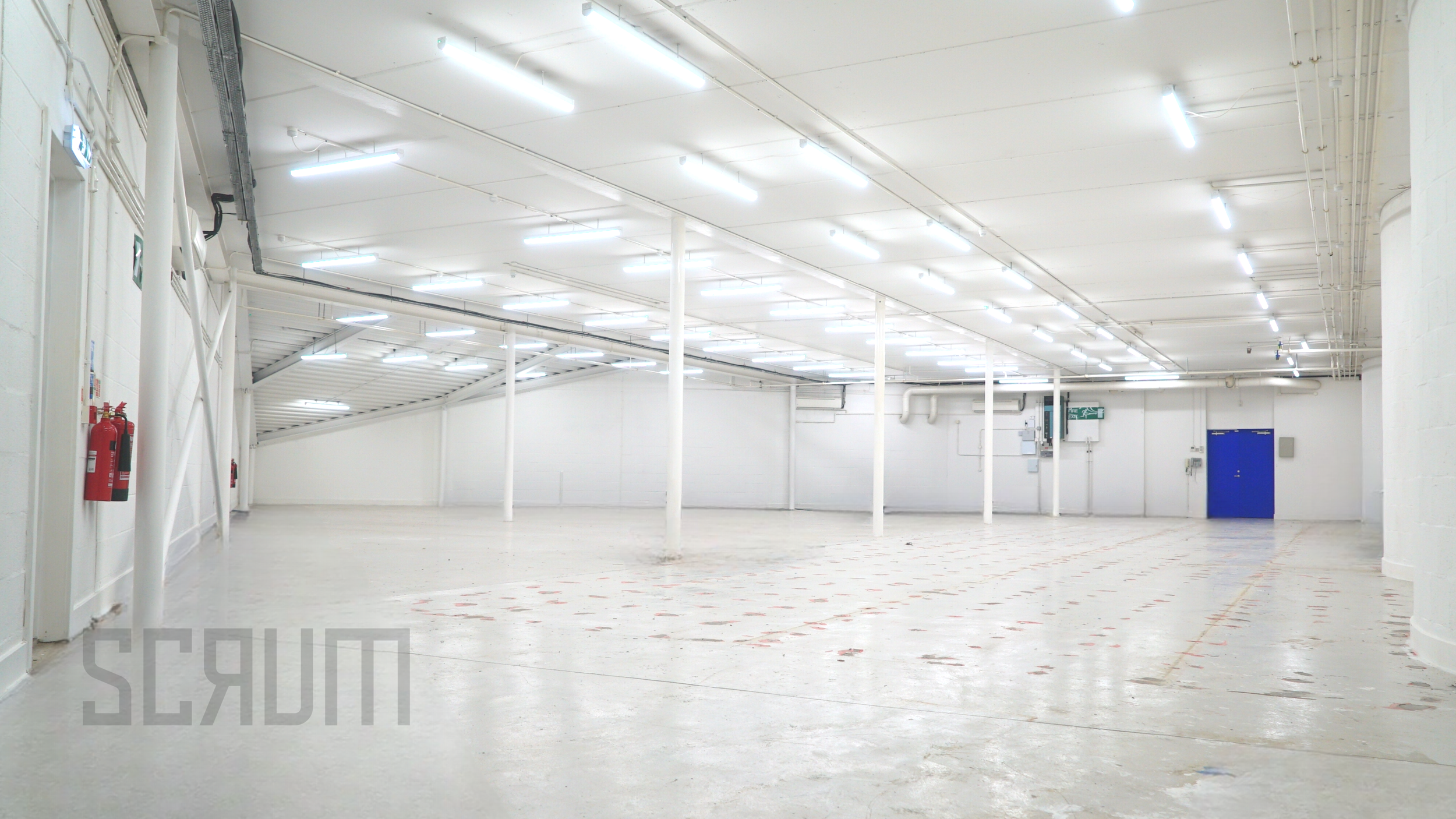
The Warehouse
413m²
Our largest and most versatile space, the Warehouse is a really, really, really big blank canvas, primed for a range of events, including film production, exhibitions, large company rehearsals and workshops, and more. Step-free accessible.
-
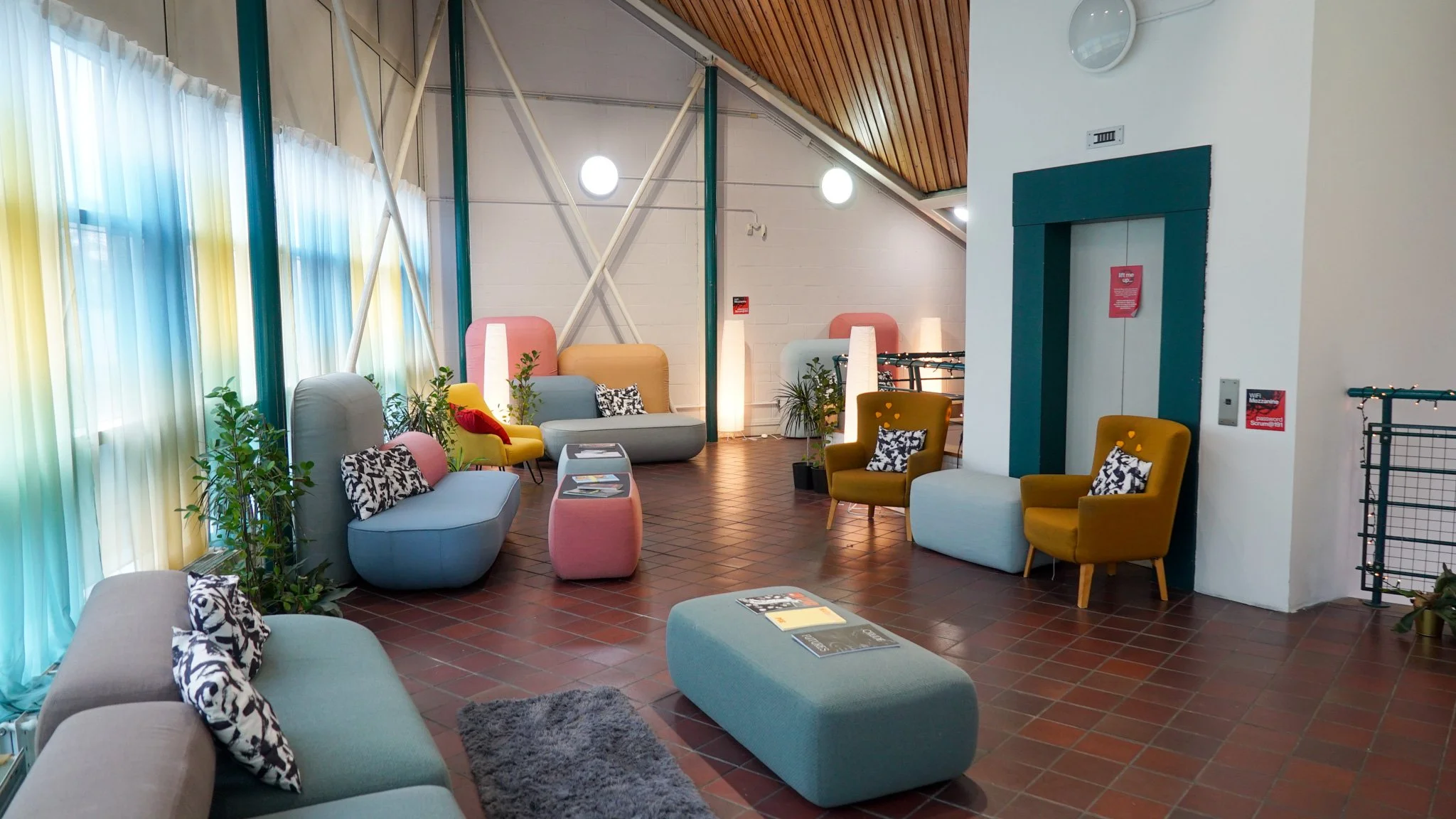
The Mezzanine
Specifications available on request
Located at the front of the building, the Mezzanine is a sociable and relaxing space. Available to hire for evening events including drinks receptions, networking events, exhibitions, booking readings and music recitals.
-
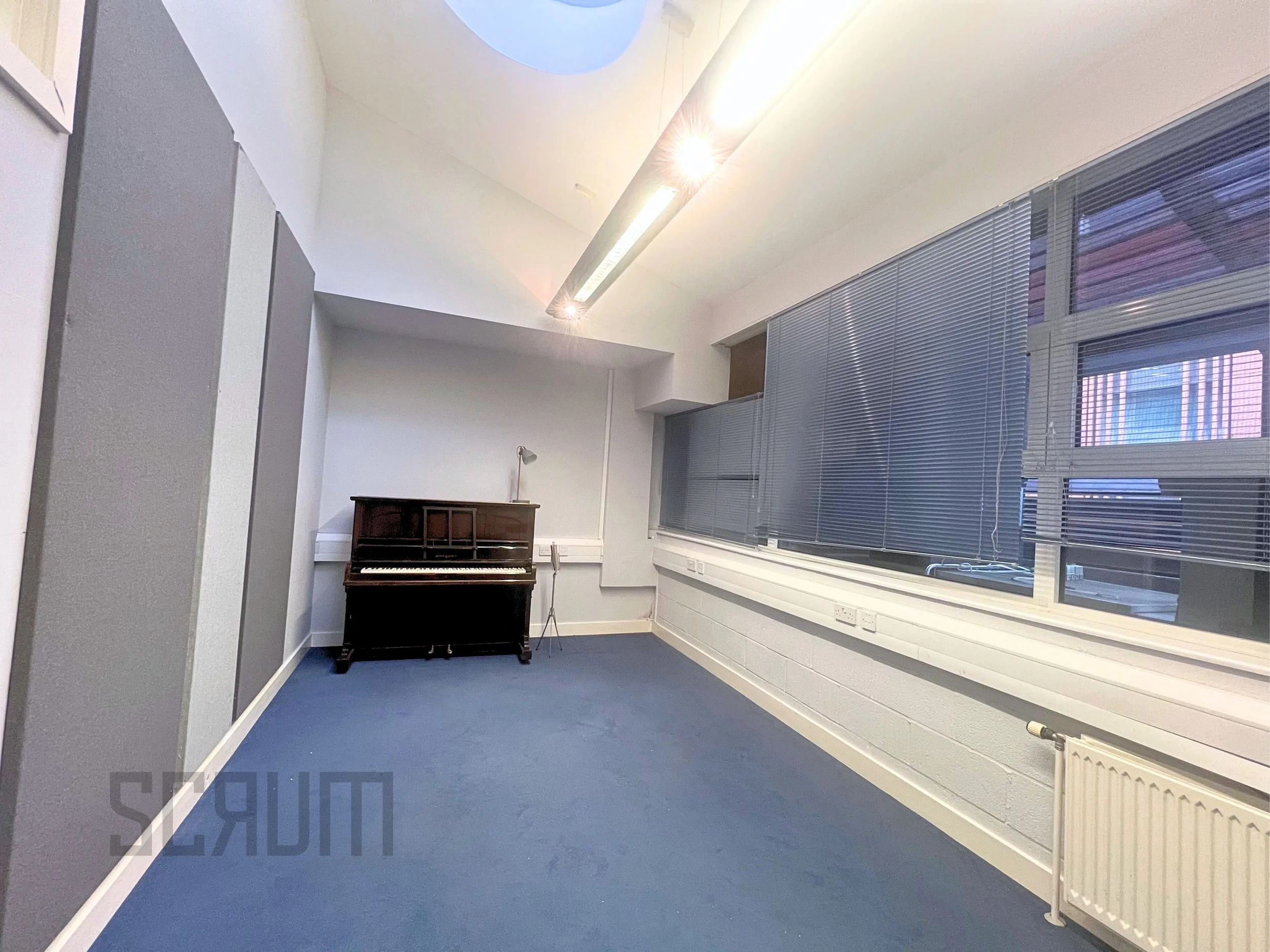
Audition Studio
16m² studio
Need to rehearse and film a self-tape? Or to cast an upcoming show? Booking includes use of Wifi, shared kitchen and toilet facilities. Available for slots of 2 hours or more. To book and enquire about equipment, get in touch with our studios team at studios@scrumtheatre.co.uk.
FAQs
-
SCRUM Theatre is a charity that exists to promote excellent, equitable theatre-making and increase access to theatre education for underserved demographics.
We offer reduced rates on our studios to hirers who belong to the following categories:
Solo or self-funded artists
Local community groups
Small-scale theatre productions
Charities with an annual income of under £500,000
If you want to find out more on whether you qualify for our Reduced Rates, you are welcome to get in touch with us at studios@scrumtheatre.co.uk.
-
If you are an actor wishing to book a studio for self-taping, please email studios@scrumtheatre.co.uk, and specify the date and time of your request.
-
Please note: the information below is mostly about Mobility access needs.
Mobility access needs
SCRUM Studios is a two-storey building. We regret that there is currently no step-free access to our First Floor spaces.
This is due to extensive issues with the building’s lift, repairs for which have been quoted at £100,000. We are trying to raise funds for this.
Ground Floor spaces (with step-free access):
The Warehouse (our main events space)
Studio Sarah
These are our largest spaces. Both can be accessed via a step-free entrance, and parking needs can be arranged if we are notified ahead of time.
Studio Sarah is a self-contained unit with its own:
Wheelchair accessible toilets
Kitchen
Quiet Room
Break-out space
Hirers of Studio Sarah must agree to share these facilities with space-users of The Warehouse who have step-free access needs.
First Floor spaces (currently no step-free access):
Studio Ira
Studio Federico
Self-tape studio
The Mezzanine
The SCRUMmage
Neurodiversity and sensory overload
Our building has a Quiet Room on each floor, with blinds to adjust lighting.
D/deaf or Hard of Hearing
Please get in touch with us at studios@scrumtheatre.co.uk for information about the acoustics of our spaces.
Meeting other access needs
If you wish to discuss something else that could be a barrier to your visit to SCRUM Studios, currently the best ways to get in touch are by email or over the phone.
Email: studios@scrumtheatre.co.uk
Phone: +44 7782 765995
We are keen to find solutions where possible, and we will always aim to get back to you quickly and transparently if we find we do not yet have the resources to meet an access requirement.
Our Studio Heroes
Our rehearsal studios Federico, Ira and Sarah are named in honour of people we conheroes from theatre history: Federico García Lorca, Ira Aldridge and Sarah Bernhardt. Each studio features a mural of the hero its named after, painted by William Dawkins. You can read about their lives in the dropdown menus below.

Federico García Lorca
Iconoclast poet, playwright & director
-
(1898-1936)
Federico García Lorca saved politics not for his poetry but for his plays. And where he produced these plays mattered almost as much as what he put in them. In 1931, Lorca was appointed director of a government-sponsored student touring theatre company, La Barraca. His mission: ‘to get ordinary working people into the theatre.’ In a van with a portable theatre, the company travelled dusty country roads to spectators all over rural Spain, many of whom had never before attended a dramatic performance. Lorca penned his greatest plays during this time, including Blood Wedding (1933), Yerma (1934), and The House of Bernarda Alba (1936).
Although Lorca could never address his homosexuality directly in his plays, he wrote tragic heroines whose struggles with marginalization, surveillance, tyranny, and frustrated love reflected the experiences of women and queer people alike within conservative Spanish society.
Lorca was murdered by fascist forces one month into the Spanish Civil War. He is remembered as one of Spain’s greatest writers and remains a potent symbol of the 140,000 people who were disappeared during and after the Civil War, many of them also LGBTQIA+ and courageous critics of authoritarianism.

Ira Aldridge
Trailblazing actor, playwright & activist
-
(1807-1867)
The African Grove Theatre (1821-23) was a Black-founded theatre company operating in downtown Manhattan. It was there that Ira Aldridge learnt both his craft, and that if he wanted to achieve the level of success he yearned for, he would have to leave the pre-Civil War United States. So Aldridge worked his passage as a steward on a ship sailing to Britain, where slavery had been abolished since 1807.
In 1833, at the Theatre Royal, Covent Garden, Aldridge became the first Black man to play Othello at a first-rate London theatre. He also excelled playing Macbeth, King Lear, Shylock, Titus Andronicus, and Richard III, and is credited with introducing a more naturalistic acting style to Europe. He was celebrated for addressing audiences at the end of his performances with powerful speeches on the abolition of slavery.
When the British press orchestrated an attack on him for marrying Margaret Gill, a white woman, Aldridge left Britain to tour Continental Europe and Russia. There he performed to packed houses and was showered with accolades including the Gold Medal for Arts and Sciences, conferred on him by the King of Prussia, the title of Chevalier Aldridge, Knight of Saxony, as well as the greatest reviews of his career.
When he died aged 60 whilst on tour in the Polish city of Łódź, he was given a state funeral.

Sarah Bernhardt
‘The greatest actress in the world’
-
(1844-1923)
One night, at the climax of a production of La Tosca, the woman celebrated as ‘the greatest actress in the world’ threw herself from the parapet of Sant’Angelo prison, but there was no mattress beneath to break her fall. Sarah Bernhardt’s right knee never recovered. For the next nine years Bernhardt lived and worked with chronic pain until, by 1915, it became so agonizing that she resolved to have the leg amputated. Reassuring admirers that it wouldn’t halt her career, she insisted, ‘In case of necessity, I shall have myself strapped to the furniture.’ And she did.
Dissatisfied with the prosthetic technology of the time, Bernhardt devised several alternatives, most notably a sumptuous white sedan chair which stagehands would use to carry her on and off the stage. Each theatrical production, film, and tour she would then embark on, including a tour of the front line to entertain the French troops, placed Bernhardt’s access requirements and autonomy at its centre.